How can HVAC contractors get more Google reviews?
October 20, 2026What Is Actually Working to Attract New Dental Patients?
October 24, 2026The Quick Answer
ChatGPT may not recommend your law firm because it cannot find enough clear, consistent, and credible information about your practice online. An incomplete website, weak local visibility, inconsistent business listings, or limited third-party references can make your firm harder to discover. AI recommendations also vary by question, location, and available search results.
Your Local Authority Takeaway
Being visible on Google doesn’t automatically mean your law firm will appear in ChatGPT recommendations.
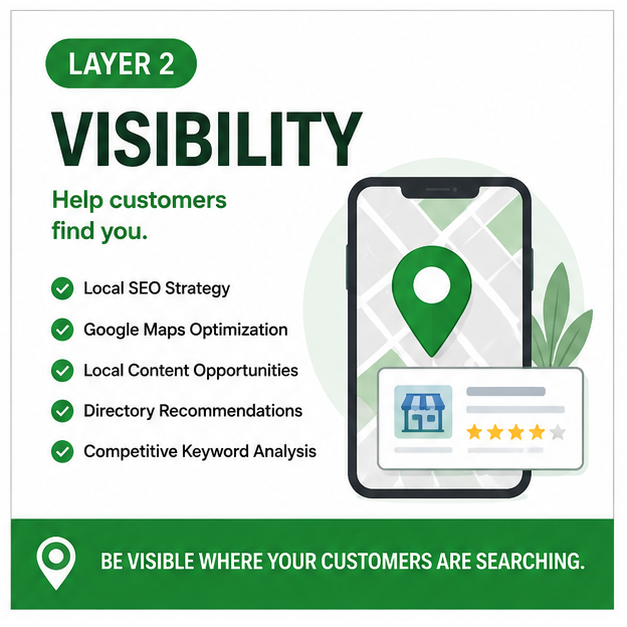
For law firms in Raleigh, Cary, Apex, and surrounding communities, the goal should be to make your firm’s expertise, location, practice areas, and reputation easy to verify across multiple credible sources. Instead of asking whether ChatGPT mentions your firm once, compare how consistently your firm and its local competitors appear across relevant legal searches.
Main Answer
1. ChatGPT doesn’t rank law firms exactly like Google
When someone asks ChatGPT, “Who is a good estate planning attorney in Raleigh, NC?” the response may depend on the wording of the question, available information, and whether ChatGPT uses web search.
Unlike Google’s traditional search results, ChatGPT doesn’t provide a fixed ranking that law firms can directly optimize for. A firm appearing in one response might not appear in another. And there is no guaranteed method for securing a recommendation.
However, law firms can improve how easily AI-powered search tools discover and understand their businesses.
2. Your website may not clearly communicate your expertise
Imagine two family law firms serving Wake County.
One has a homepage describing its legal services, a basic contact page, and little additional information. The other has dedicated pages explaining divorce, child custody, alimony, and property division. Its attorneys have detailed biographies, professional credentials, and helpful answers to common legal questions. The second firm provides more information that search engines and AI systems can use to understand its services and qualifications.
Your website should clearly communicate:
- Your primary practice areas and the clients you serve.
- Your attorneys’ names, credentials, and experience.
- Your office location and relevant service areas.
- Answers to common questions potential clients ask.
- Clear contact information and consultation options.
This doesn’t guarantee AI recommendations, but it makes your firm’s information easier to find and evaluate.
3. Your online reputation extends beyond your website
AI visibility isn’t just about publishing more content.
Your firm’s information may appear across Google Business Profiles, legal directories, professional associations, local publications, and other websites.
If those sources contain outdated addresses, inconsistent names, or incomplete attorney information, prospective clients—and systems attempting to verify your firm—may encounter conflicting details.
Check your firm’s presence on relevant platforms, including Google, the North Carolina State Bar directory, and established legal directories. Focus on accurate information and legitimate third-party recognition rather than purchasing backlinks or creating dozens of low-quality directory listings.
4. Your website might be blocking AI search crawlers
Here’s a technical issue worth checking.
OpenAI uses a web crawler called OAI-SearchBot to help discover websites for ChatGPT search. If your website blocks this crawler through its robots.txt file or security settings, its content may be excluded from ChatGPT search answers. OpenAI recommends allowing OAI-SearchBot for websites that want to appear in ChatGPT search results. This is separate from allowing content to be used for AI model training.
Ask your website administrator to check whether important pages are publicly accessible to search engines and AI search crawlers.
5. How can you improve your law firm’s AI visibility?
Start with these five practical steps:
- Test relevant questions. Ask ChatGPT to recommend divorce attorneys, estate planning lawyers, or other relevant specialists in Raleigh and nearby communities. Repeat the tests with web search enabled, and record which firms appear.
- Compare competing firms. Review the websites, attorney biographies, practice area pages, and credible third-party mentions of firms that appear repeatedly.
- Strengthen your website content. Publish useful answers to questions clients actually ask, with clear attorney attribution and relevant North Carolina legal context.
- Verify your business information. Keep your Google Business Profile, attorney directories, and website information accurate and consistent.
- Measure actual inquiries. Track consultation requests, calls, and referral sources rather than treating AI mentions as the only measure of success.
Google’s guidance for AI-powered search reinforces the importance of helpful original content, accessible websites, and established SEO practices rather than special AI optimization tricks.