
How many Google reviews should a law firm have?
September 27, 2026What should a law firm website include?
September 27, 2026The Quick Answer
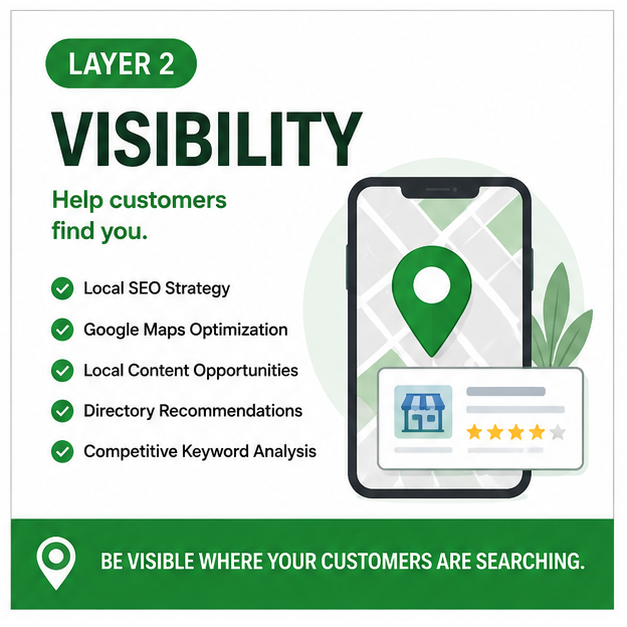
If your law firm isn’t showing up prominently on Google, the problem is usually a combination of your Google Business Profile, website relevance, location, reviews, local SEO, and overall online authority. Google says local results are primarily determined by three factors: relevance, distance, and prominence.
Your Local Authority Takeaway
Your law firm doesn’t need to “beat Google.” It needs to become a stronger local result than the law firms currently showing above you.
Search for the legal services you actually want to generate leads for—such as “personal injury lawyer Raleigh,” “family law attorney Raleigh,” or “estate planning attorney near me”—and compare your firm’s Google presence with the firms appearing prominently.
That competitive gap is usually where the answer is.
Main Answer
1. Your Google Business Profile Isn’t Strong Enough
For local searches, your Google Business Profile can be one of your law firm’s most important digital assets.
Google recommends keeping Business Profile information complete and accurate, including your address, hours, business category and other relevant details. Your profile should also accurately represent your practice areas and location. An incomplete, inaccurate, unverified or poorly optimized profile can make it harder for Google to understand when your firm should appear.
2. Google Doesn’t See Enough Relevance
Google defines relevance as how closely a Business Profile matches what someone is searching for. If you’re a Raleigh law firm practicing family law, for example, your website should make that obvious.
A generic page saying you offer “experienced legal representation” isn’t nearly as useful to a prospective client—or a search engine—as detailed content answering questions about divorce, child custody, separation agreements and other services you actually provide. Strong individual practice-area pages can help establish that relevance.
3. Your Location Matters
You can’t optimize your way out of geography completely.
Google specifically identifies distance as a local-ranking factor. Google considers how far a potential result is from the location used in the search—or, when a location isn’t specified, what Google knows about the searcher’s location. That means a Raleigh attorney may rank differently depending on whether the person searching is in Downtown Raleigh, Cary, Apex, Wake Forest or another part of the Triangle.
This is one reason you shouldn’t judge your rankings based on a single search from your own computer.
4. Competing Firms May Have More Prominence
Google’s third major local factor is prominence, essentially how well known a business appears to be. Google says this can include information from across the web, including links and reviews. Google also specifically states that more reviews and positive ratings can help local rankings.
For a law firm, signals worth comparing can include:
- Google review quantity, quality and recency
- Links from reputable websites
- Legal and local citations
- Attorney profiles and credentials
- Useful legal content
- Local community mentions
- Consistent business information across the web
Don’t just ask, “Do we have reviews?”
Ask, “How does our review and authority profile compare with the Raleigh firms currently outranking us?”
5. Your Website May Not Be Sending Strong Enough Signals
Your Google Business Profile doesn’t operate in isolation. Google says local listing information can be gathered from multiple sources, including a business’s official website. Your site should clearly communicate who you are, what legal services you provide, where you provide them, and why someone should trust your firm.
Technical issues can matter too. Pages blocked from Google, indexing problems, weak internal linking, confusing site architecture, or poorly implemented structured data can make it harder for Google to understand your website. Google recommends LocalBusiness structured data as one way to provide clearer business information and recommends using Search Console’s URL Inspection tool to verify how Google sees important pages.
Ultimately, ranking problems are rarely caused by one missing keyword or one SEO setting. They’re usually an authority gap between your firm and the firms Google is already choosing to display.